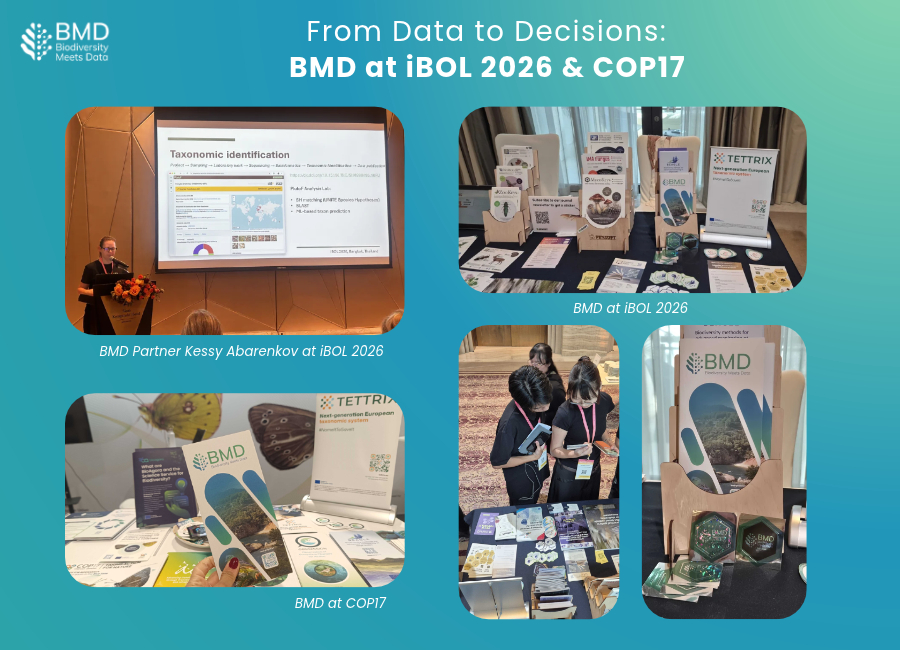
From DNA Barcoding to Global Biodiversity Policy: BMD at iBOL 2026 & COP17
How can we turn biodiversity data and observations into knowledge that helps protect nature? This autumn, BMD was represented at two events that explored this question: the 10th International Barcode of Life Conference (iBOL 2026) in Thailand and COP17 in Armenia. At iBOL 2026, researchers shared new ways of collecting biodiversity data and identifying species, while at COP17, stakeholders discussed how to turn that knowledge into action.
EU Science for Biodiversity at COP17
BMD was represented at COP17, held from 19 to 30 October in Yerevan, Armenia, where participants had the opportunity to review the progress towards the Kunming-Montreal Global Biodiversity Framework and discuss what it takes to turn knowledge into collective action. This framework sets 23 targets for 2030 to halt and reverse biodiversity loss, with the long-term vision of a world living in harmony with nature in 2050. Achieving this requires reliable data and monitoring to track the progress towards these goals.
BMD contributes to this effort by improving how biodiversity data are collected, integrated and shared through its digital platform, the Biodiversity Explorer. The platform helps natural resource managers and policymakers access biodiversity data to make decisions that support conservation efforts.
As part of COP17, BMD was featured at the EU Science for Biodiversity booth, hosted by CO-OP4CBD, BioAgora, RESPIN, Biodiversa+ and NetworkNature, showcasing our efforts to make scientific knowledge easier to find and use in decision-making and policy.
DNA barcoding & metabarcoding at iBOL
From 2 to 6 November, around 350 delegates from 51 countries gathered in Bangkok, Thailand, for iBOL 2026. Organised by the International Barcode of Life Consortium, the conference provided a space to exchange ideas and discuss the latest developments in DNA barcoding and metabarcoding. These analysis methods allow researchers to identify species from short DNA sequences, taken from environmental samples such as water or soil, making biodiversity monitoring possible on a much larger scale.
During the event, BMD partner Kessy Abarenkov (University of Tartu) presented the full PlutoF-based eDNA data mobilisation, management, and publication workflow implemented in and promoted through BMD. As eDNA studies generate ever larger datasets, PlutoF helps keep samples, sequences and metadata more organised and ready to share.
Want to learn more about how to collect eDNA samples or work with PlutoF? Check out the resources on the BMD training portal.
From data to decisions
Together, COP17 and iBOL 2026 covered both ends of the same chain: new methods produce more and better biodiversity data, and decision-makers use that data, converted to accessible formats, to track progress towards global targets. Both events offered BMD the opportunity to present its work, reach new audiences, and connect with others working towards a better understanding of biodiversity.
To learn about future events where BMD will be present, subscribe to our newsletter.