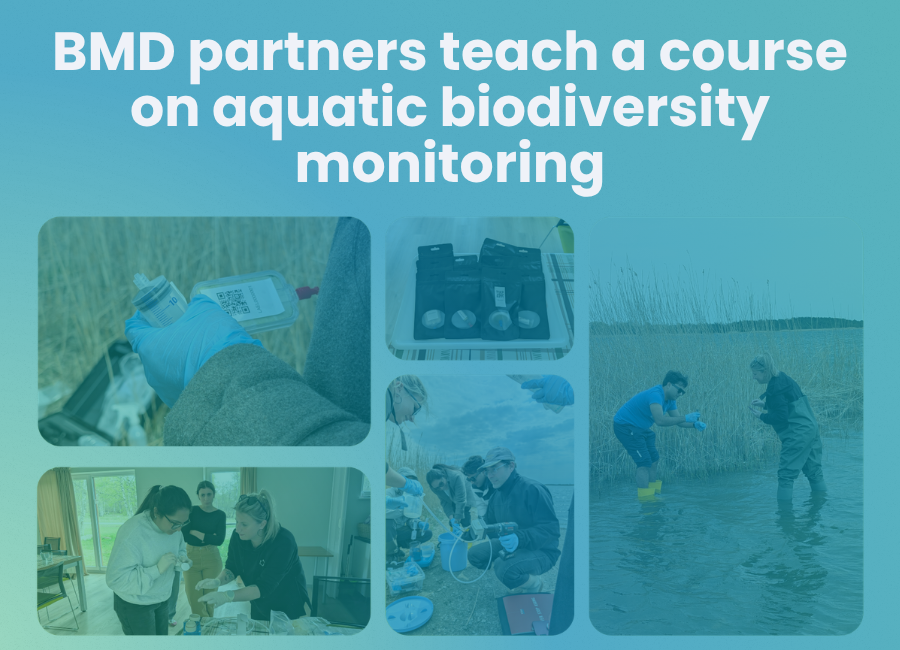
Course participants collecting aquatic samples for biodiversity data analysis
Hands-on course on aquatic biodiversity monitoring using eDNA and PlutoF workflows with participation from BMD partners
On 11-12 May 2026, a course titled “From Water Samples to eDNA Identifications: PlutoF Workflows” took place in the Laelatu Biology Station of the University of Tartu. It was led by Kristel Panksep, and BMD partners – Kessy Abarenkov and Urmas Kõljalg. The course welcomed participants from other institutions nearby, such as the Estonian Marine Institute of the University of Tartu and the University of Turin. It was co-organised by NATARC, the Natural History Museum and Botanical Garden of UT, BMD, Pluto F, and Pluto F GO, and it aimed to give hands-on training in applying environmental DNA (eDNA) methods to study aquatic biodiversity.
The course provided a roadmap for aquatic biodiversity monitoring, from data collection to final publication. Starting with collection methods, the trainers explained how to pick out water samples using the PlutoF GO mobile application and how to transfer them to the PlutoF platform. They also focused on data management on the platform, taking into account FAIR and Open Science principles. Following data analysis, the course taught participants how to interpret eDNA results through sequence-based biodiversity analysis, and finally, participants learned how to publish their sample metadata to the European Nucleotide Archive (ENA) and publish it on GBIF.
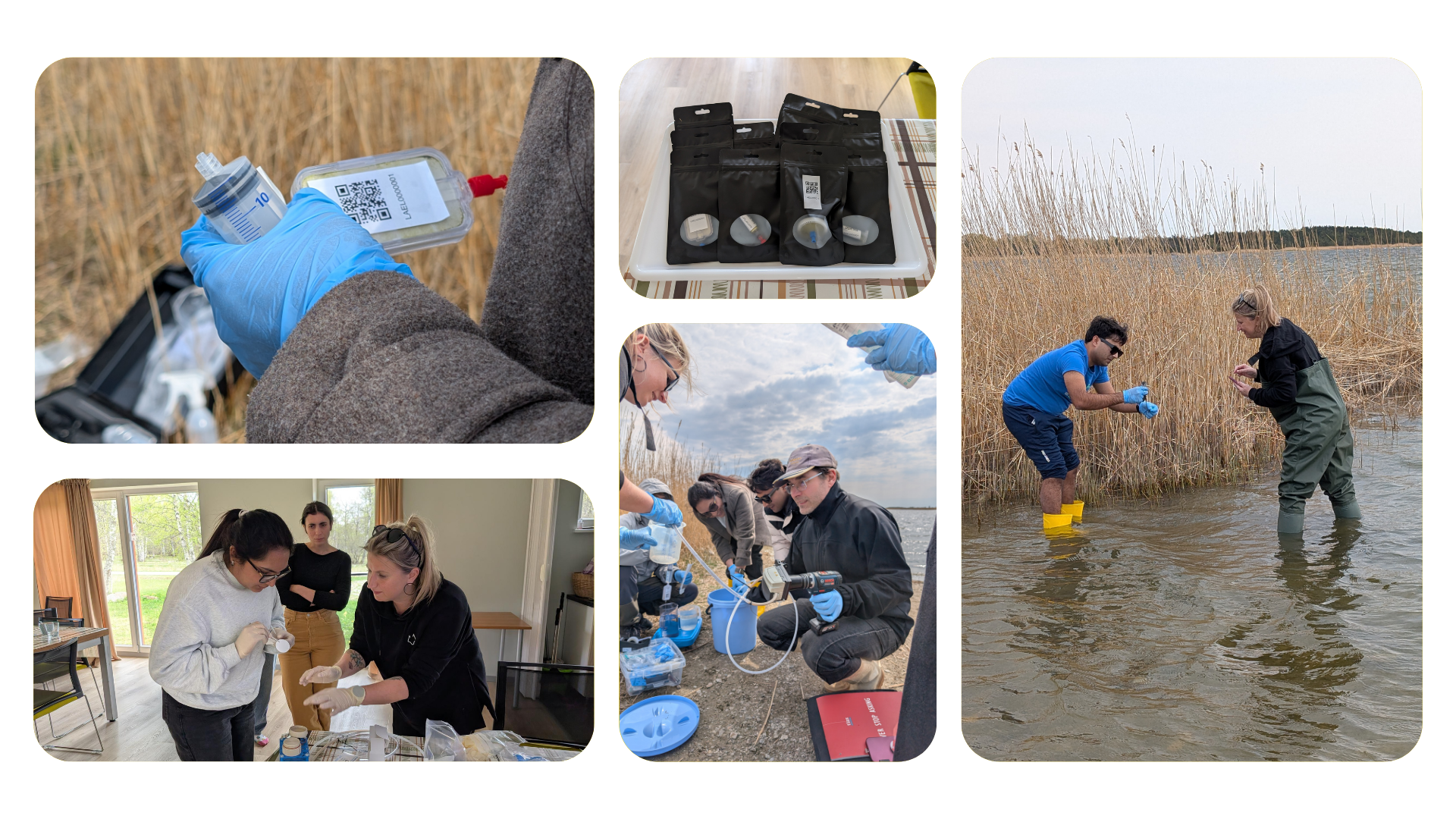
Photos of participants collecting aquatic samples for biodiversity data analysis
The topic of eDNA sequencing will also be approached during our High-throughput biodiversity monitoring workshop that will take place in Barcelona on 25-27 May, where Kessy Abarenkov will once again provide training on data collection and analysis.